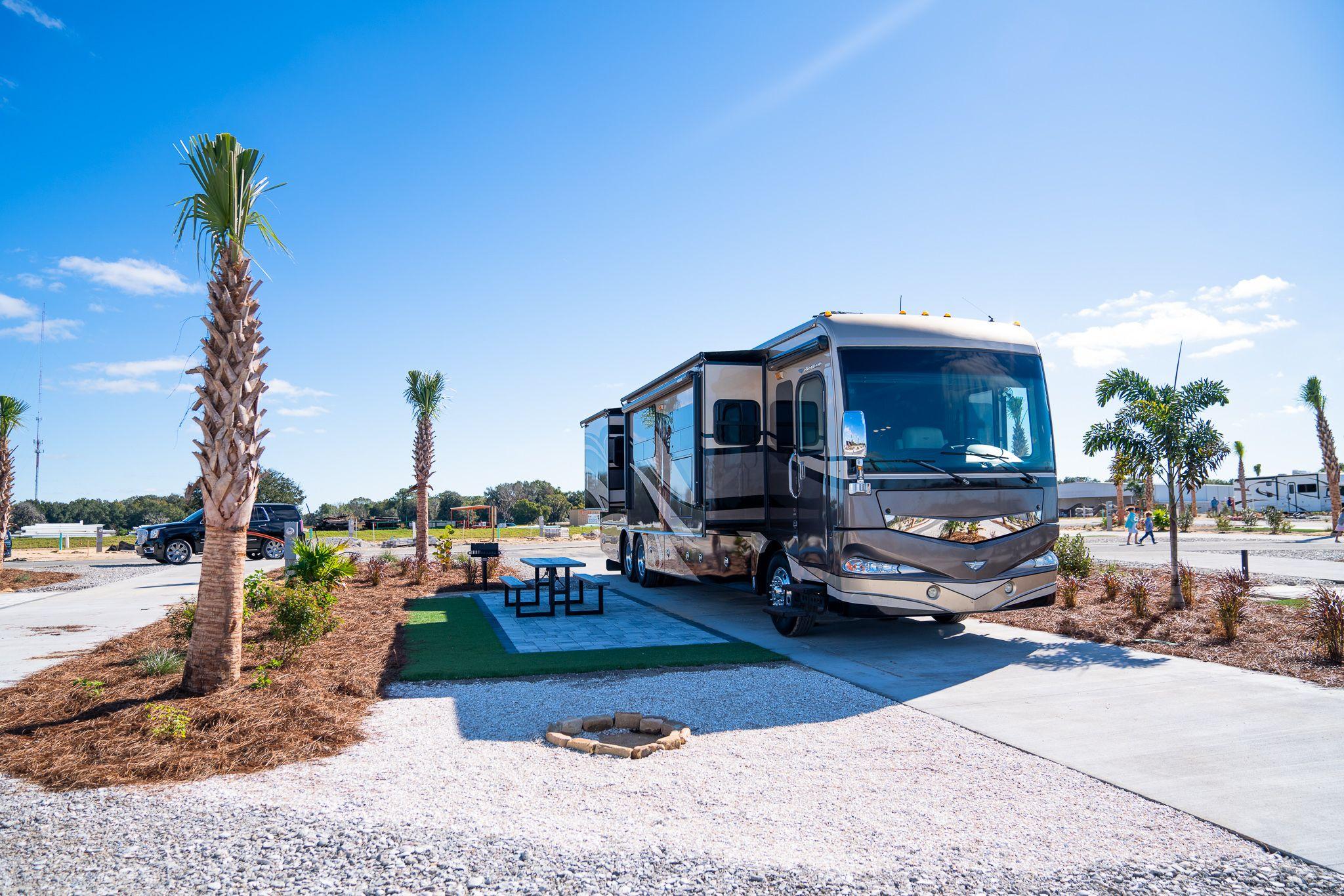
A 40-foot RV won’t fit in every single park, but it fits in a whole lot of them if you know what to check before you go. Every park sets its own rules. What works at one place could be a disaster at another. But with some planning and a few smart moves, you can find plenty of places that welcome big rigs.
Key Takeaways
- Only about half of national park campgrounds can handle a 40-foot rig
- Private RV parks tend to be more welcoming to big rigs than government-run parks
- Always measure your actual rig length, model numbers can be deceiving
- Call ahead and ask for the specific site number before you book
- Look for parks that actually say “big rig friendly”
- Combined length limits can catch you off guard if you’re towing something
- Newer RV parks are often built with bigger rigs in mind
Will a 40-Foot RV Fit in Most RV Parks?
Honest answer: it really depends on where you’re going. A 40-footer is considered a big rig, and not every park is set up for that.
Here’s what the numbers show. A 25-foot RV can fit into roughly 93% of RV-friendly campgrounds in national parks. But bump that up to 40 feet, and the number drops to about 53%. Go past 41 feet, and options get scarce, only around 7% of national park campgrounds can take a rig that size.
Why so limited? Because many of these parks were built decades ago when RVs were a lot smaller. The roads are narrow, the turns are sharp, and the sites were designed for tents or small trailers. Nobody was thinking about 40-foot motorhomes back then.
What Makes a Park Truly Big-Rig Friendly?
A park that calls itself “big rig friendly” should have wide roads, gentle turns, and sites long enough for a 40-foot motorhome or fifth wheel. But here’s the problem, there’s no official definition for that phrase. One owner might think a 38-foot site counts as big. Another might only call 45 feet big.
So the label alone doesn’t mean much. A park can advertise “big rig friendly” while only having a handful of sites that actually work for your setup. The key is checking the specific site, not just the park’s marketing.
What to look for in a genuinely big-rig friendly park:
- Paved or concrete pads that are level and long enough
- Pull-through sites so backing in isn’t required
- Wide interior roads with enough room to turn
- 50-amp electrical service (most big rigs need this)
- Sites clearly marked with their maximum length
How Do I Find RV Parks That Accept 40-Foot RVs?
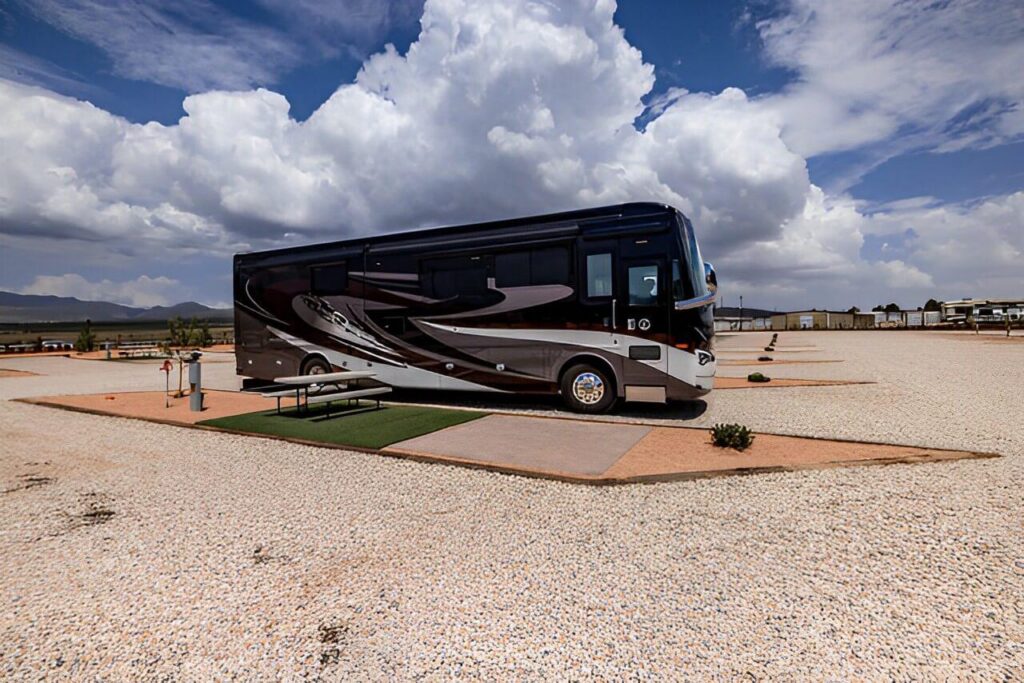
There’s good news here. Plenty of places can handle a 40-foot rig. It just takes a little digging.
Private RV parks and resorts are usually the safest bet. Most privately owned campgrounds have upgraded their facilities over the years to attract bigger rigs. Many offer pull-through sites with full hookups and plenty of room to move around.
National and state parks are trickier. Some do have spots for 40-footers, but they’re often limited in number. Yellowstone has campgrounds that fit 40-foot and even 50-foot RVs. Rocky Mountain National Park allows 40-foot rigs too. But Joshua Tree? Way tighter, lots of sites there max out between 25 and 35 feet.
Boondocking on public land is another option. BLM land and national forests usually have tons of open space for big rigs, though hookups won’t be available.
And don’t forget the apps. RV Trip Wizard, Campendium, and AllStays let you filter by rig length and read reviews from other big-rig owners. These tools save hours of guesswork.
What Should I Do Before Booking a Site?
Never assume a 40-foot RV will fit just because a park says it’s big-rig friendly. Here’s what experienced RVers do before reserving:
Know your real length. The number in the model name isn’t always accurate. Measure from the front bumper to the back bumper, including hitches, ladders, bike racks, spare tires, everything. If you’re towing a vehicle, know the combined length too.
Call the park directly. Don’t rely only on the website. Ask for the exact site number they’re assigning you. Then ask these questions:
- What’s the actual length of that specific site?
- Is it pull-through or back-in?
- Are there trees, poles, or other obstacles that could make it tight?
- Where are the utility connections located?
Check site dimensions online. Many parks list site-specific details on platforms like Recreation.gov. If a site says “Max Vehicle Length: 40 ft,” that means your entire rig needs to be 40 feet or less, including anything you’re towing.
Read recent reviews. Other RVers with similar-sized rigs will tell you honestly whether a park truly accommodates large vehicles.
Quick Comparison: Where Can a 40-Foot RV Go?
| Type of Campground | Likelihood of Fitting | What to Watch For |
| Private RV Parks/Resorts | High | Check specific site length, not just park description |
| National Parks | Moderate (about half of sites) | Many older parks have tight roads and small sites |
| State Parks | Varies widely | California parks often cap at 30 ft; Florida is more generous |
| County Parks | Low | Many have strict 30-35 ft limits |
| BLM/Public Land | High | No hookups, but plenty of space |
| KOA Campgrounds | Moderate | Many have 40-ft max, some have longer sites |
What About Backing In vs. Pulling Through?
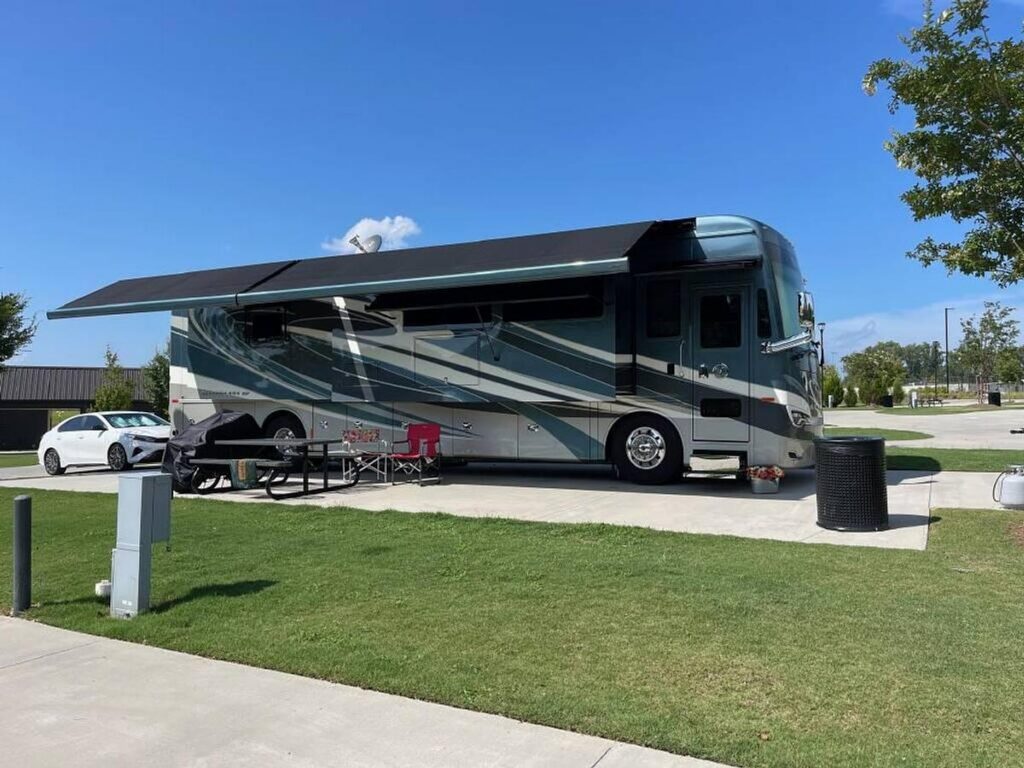
Pull-through sites are a whole lot easier when you’re driving something the size of a small apartment. But they’re not always available. Plenty of parks that welcome big rigs only offer back-in spots for the larger sites.
Backing a 40-footer takes patience and steady nerves. If that’s not your strong suit, look for parks that advertise pull-through sites specifically for big rigs. Some places have pull-throughs that stretch 60 feet or longer, more than enough room.
Here’s an interesting quirk: a 40-foot tag axle motorhome can actually turn tighter than a 38-foot non-tag model because the tag axle shifts the pivot point. But even with that advantage, narrow park roads can still test your skills.
Are There Any Parks That Simply Will Not Take a 40-Foot RV?
Yes. Some parks have hard limits that a 40-footer just can’t meet.
For example, plenty of California state parks and coastal county campgrounds cap out at 30 feet. Gilbert Ray Campground in Arizona enforces a strict 40-foot total rig length rule that applies to everything; trailers, bike racks, the works.
Watch out for parks that list a 40-foot max but mean it includes your tow vehicle too. If you’re hauling a 25-foot fifth wheel behind a truck, your combined length could sail past 40 feet without you even realizing it.
The lesson here is simple: never assume. Always check the specific rules for each park before you go.
Ready to Hit the Road in Your 40-Foot RV?
A 40-foot RV opens up a lot of travel possibilities, but it does require some extra planning. The good news? With the right prep; knowing your real dimensions, calling ahead, and using the right tools, you’ll find plenty of campgrounds that are happy to have you.
At VV RV Park, big rigs are what we do. Whether you’re rolling in with a 40-foot motorhome or a large fifth wheel, our sites are built to fit your setup comfortably. Our team is here to help you plan a stress-free stay.
Contact us today to book your spot, we’d love to have you.
Frequently Asked Questions
What is considered a “big rig” RV?
If your setup stretches past 40 feet, you’re in big rig territory. That covers large Class A motorhomes and most fifth wheels. Basically, if turning around feels like an event, it’s a big rig.
Can a 40-foot RV fit in national parks?
That’s a coin flip. Roughly half of national park campgrounds can take a 40-footer. But it swings wildly, some parks have sites up to 50 feet, while others cap things at 25. Always check the specific park first.
Do I need to worry about combined length limits?
Absolutely. Some parks measure everything—your RV plus whatever you’re towing behind it. A 40-foot motorhome with a car attached might push you over the limit even though the RV itself would fit fine.
What should I do if I arrive and my RV doesn’t fit?
You might get turned away at the gate. Some parks offer refunds or help find another campground, but plenty won’t. Don’t gamble on it. Call ahead and confirm your site before you drive all that way.